Robert Pell, Founder and CEO of Minviro

Minviro helps global manufacturers and resource companies measure, verify, and reduce environmental impact across complex supply chains using primary and secondary data. Their XYCLE platform delivers auditable life cycle insights that stand up to regulatory and investor scrutiny.


With deep expertise in batteries, mining, automotive, and electronics, Minviro supports some of the world’s largest enterprises in turning sustainability into a competitive advantage.


In this interview, Robert Pell shares his vision to scale high-quality sustainability analysis to drive measurable impact reduction, the limitations of black box data, and how life cycle assessment (LCA) delivery has changed.


Read on to discover where Minviro meets ecoinvent.


Introducing Robert Pell, Founder and CEO of Minviro

Robert Pell founded Minviro during his PhD to ensure that the energy transition doesn’t simply shift impacts upstream, but is instead grounded in transparent, data-driven decision-making from materials to market.


As CEO, Robert’s role is to ensure the product is scientifically rigorous and commercially relevant. He safeguards that XYCLE is built on robust LCA methodology, while also functioning inside real businesses, supporting decision-making, enabling ecodesign, strengthening governance, and meeting tightening regulatory requirements.


He leads the product vision and long-term direction of the company, defining how life cycle intelligence becomes core infrastructure for global supply chains. To achieve this, he works closely with product, engineering, and modeling teams to ensure methodological integrity. He also communicates with clients, regulators, and industry stakeholders to anticipate where market and policy pressures are heading.

  1. Please describe Minviro’s core activities and offerings, including your LCA tool “XYCLE”.

Minviro provides the scientific and digital infrastructure required to operationalize LCA across complex industrial supply chains. We deliver this through three integrated solutions: consultancy, software, and data.


We started as an LCA consultancy focused on complex industrial supply chains, particularly in sectors such as battery materials, mining, chemicals, and advanced manufacturing. Through this work, we developed deep expertise in modeling raw materials and industrial production routes. That hands-on experience with enterprise clients exposed the limitations of traditional LCA tools and directly shaped the development of our software.


XYCLE is our LCA software, built by practitioners to embed LCA across organizations. It enables companies to build transparent, ISO-aligned, and regulatory-ready LCA models at scale by combining primary supplier data with high-quality secondary databases such as ecoinvent. ecoinvent data forms a structured backbone of our background modelling environment, ensuring consistency, methodological integrity, and global comparability across complex supply chains.

Robert Pell LCI data interview quote

XYCLE is designed to support ISO-compliant modeling, product carbon footprint requirements, and evolving regulations like the EU Battery Regulation, while remaining practical for enterprise use.


  1. What makes LCA such a powerful tool for understanding environmental impacts, and how have you seen the field evolve during your career?

At a high level, LCA is a structured approach to better decision-making across complex systems. It helps businesses understand the environmental consequences of choices that span multiple processes, suppliers, and regions. That ability to make informed decisions is what industry and policymakers increasingly need.


What has changed significantly is how LCA is delivered. It used to be largely one-off, static studies conducted in isolation. Today, it is moving toward live, connected ecosystems where suppliers are integrated, primary data flows directly into models, and results update dynamically. That shift enables faster, more consistent decision-making and embeds LCA in operations rather than treating it as a standalone report.


We are entering a phase where environmental impact data becomes a dynamic operating layer within organizations, shaping strategy and supply chain choices rather than merely recording them.

Robert Pell LCI data interview quote
  1. The LCA data landscape ranges from simple emission factor databases to full unit process inventories. How do you see these different sources serving different purposes? Where does ecoinvent fit in that ecosystem?

Different data sources serve different levels of decision-making.


Simple emission factor databases are useful for rapid screening, early-stage estimates, or high-level reporting. They provide speed and simplicity, which can be appropriate when the goal is directional insight.


Full unit process inventories serve a different purpose. They provide transparency, technological detail, and geographic specificity. That level of granularity is essential when modeling complex supply chains, conducting scenario analysis, or meeting regulatory requirements that demand traceability.


Within XYCLE, this is combined with proprietary datasets and primary supplier data to improve representativeness and decision relevance.


  1. When your clients need to make high-stakes decisions or defend their environmental impact assessments to investors and regulators, what role does data quality play?

As sustainability claims move from voluntary reporting into regulated disclosure, the cost of weak data increases dramatically. Data quality directly affects strategy, capital allocation, and the ability to defend results to investors and regulators.


Many companies set decarbonization targets based on the data available at the time. As modeling improves—becomes more dynamic and more representative—LCA is moving from one-off reports to live, connected systems embedded in operations, and results can change accordingly. In many cases, that fluctuation reflects better science and a more accurate understanding of impacts. However, organizations often see these changes as a risk because they may affect when targets are achieved or how past decisions are perceived.


Without a clear understanding of data quality, representativeness, and methodological assumptions, decisions can be misinformed. High-quality, transparent data allows companies to explain why numbers evolve over time and ensures that strategy is based on robust evidence rather than unstable assumptions.

Robert Pell LCI data interview quote
  1. Transparency and traceability are often cited as critical in LCA. How do your clients benefit from being able to trace results back to underlying process data?

Being able to trace impacts back to the underlying process or inventory is fundamental. It allows companies to see exactly where impacts arise at a specific production step, technology, region, or supplier rather than relying on a single aggregated result.


When traceability is combined with scenario analysis and deeper interpretation, it becomes a powerful decision tool. Clients can test alternative sourcing routes, production technologies, or energy mixes and understand how those changes influence the overall footprint. That moves LCA from static reporting to informed strategy.


Black box solutions do not provide that level of insight. If you cannot see how a result was built, you cannot properly audit it, and trust is reduced. As automation increases, maintaining methodological transparency becomes even more critical. For regulatory reporting and investor scrutiny, organizations need to demonstrate how results were constructed.


In XYCLE, traceability is embedded in the architecture rather than added as a reporting feature. Every process link, background dataset, and primary supplier input remains visible and traceable within the modeling environment. Users can follow data flows through the system, review assumptions and data quality indicators, and export structured outputs that retain this traceability.


Importantly, this transparency is paired with structured access controls. Different user roles, such as model owners, contributors, and viewers, allow organizations to involve suppliers, internal teams, and stakeholders in a controlled way. Contributors can upload and verify primary data without altering model structure, while decision makers can review validated results with full traceability. This ensures both collaboration and governance.


  1. XYCLE works with full unit process and LCI data rather than aggregated emission factors. What does that unlock for your users that simpler tools can’t deliver?

Working with full unit process and LCI data removes the black box element. Instead of relying on a single aggregated emission factor, users can review the underlying inventory, understand how each process contributes to impact, and customize datasets to reflect specific suppliers, technologies, geographies, or forward-looking assumptions. That level of methodological visibility is not possible with simplified, factor-based tools.


What this unlocks is increased control and stronger auditability. Companies can clearly demonstrate how results were built, document assumptions, and justify changes over time. It also allows them to plan with confidence, including testing alternative sourcing routes, energy mixes, or production pathways while maintaining a clear, defensible link between data, methodology, and outcome.


For enterprise users, this means moving from estimated averages to a supplier-specific strategy. Environmental performance becomes something they can engineer and optimize rather than approximate.


  1. Many companies start with simple carbon calculators that give them a number but not much else. Can you share an example where a client needed to go deeper to trace impacts through their supply chain, and what that enabled?

Most companies start with a simple carbon calculator because it’s quick. You get a number, you can report it, and you can say you’ve measured your footprint. The problem is that the number doesn’t tell you much about what the confidence is, whether it reflects reality, or where to act.


We worked with a large original equipment manufacturer (OEM) whose footprint was dominated by supply chain impacts. On paper, they had the data covered. In reality, most of it was based on spend averages and generic emission factors. That was fine for disclosure. It wasn’t useful for decision-making.


They had hundreds of tier 1 suppliers, and the real impact wasn’t neatly confined to that level. The hotspots were further upstream, in specific metal refining routes, precursor chemistries, and energy mixes tied to certain regions. “Purchased goods and services” as a line item told them nothing about which material, which process, or which supplier relationship actually mattered.


We rebuilt the model properly. That meant disaggregating components to the process level using established LCA methodology and good background data, then prioritizing where primary supplier data would genuinely change the result. Instead of asking 500 suppliers for everything, we identified the 20–30 suppliers that were driving most of the impact.


That changed the conversation internally. Procurement could identify which suppliers were structurally higher carbon. Engineering could see where design changes would reduce impact. Sustainability could move from broad Scope 3 targets to specific reduction pathways grounded in actual production routes.


It wasn’t about producing a more sophisticated footprint for the sake of it. It was about operationalizing supplier data. Once you can trace impact through the value chain with sufficient scientific depth, you can prioritize properly and engage suppliers on concrete targets rather than abstract ones.


  1. Looking at how your most sophisticated clients use XYCLE, what becomes possible when teams move beyond surface-level sustainability metrics?

When teams move beyond headline metrics, sustainability stops being retrospective and becomes strategic. The most advanced organizations use XYCLE to model entire product portfolios at once, running mass bill of materials (BOM) LCAs in seconds to see where real risks and opportunities lie. They connect suppliers directly into the ecosystem, extending traceability beyond tier 1 and addressing hotspots that may sit two or three tiers upstream.


Most importantly, they use LCA before decisions are locked in. Procurement, engineering, and sustainability teams test sourcing routes, production pathways, and future scenarios dynamically, understanding trade-offs before capital is committed or contracts are signed. At that point, environmental impact becomes something you design for and not something you report on after the fact.


Environmental performance will increasingly be treated with the same rigor as cost, quality, and engineering specifications. Organizations that embed it into decision systems now are not only improving compliance, but they are building a structural competitive advantage.

Robert Pell LCI data interview quote

Interested in becoming an ecoinvent partner? Contact us.

Johnson Gui Founder and CEO of HiQLCD

JimuLCA, developed by E-C Digital (HiQLCD’s parent company), is China’s largest LCA solution provider—purpose-built for the sectors that need it most. As ecoinvent’s authorized partner in China, HiQLCD delivers the world’s most trusted life cycle inventory (LCI) data through private cloud and enterprise deployments designed for Chinese business environments.


In this interview, Johnson Gui describes sustainability in China, the Jimu LCA tool’s block-based approach, and the digital and AI innovations behind their progress. Ondrej Szabo, in turn, provides insights on the Chinese sustainability market, why the partnership between ecoinvent and HiQLCD is so important, and how the two organizations have jointly developed innovative private cloud solutions to deliver ecoinvent data to Chinese enterprises.


Read on to discover where HiQLCD meets ecoinvent.

Introducing Johnson Gui

Johnson’s sustainability background includes experiences from around the world, which helped to build his wide-reaching perspective on LCA.


His career has been a single, unbroken thread: making environmental assessment work inside real industry. From studying environmental engineering in China and industrial ecology in Sweden, to working at ArcelorMittal in France and Baosteel in China—the world’s two largest steelmakers—he has stayed at the exact point where LCA meets the factory floor.


Johnson has explored how digital and information technologies could be combined with traditional LCA and consulting approaches. He seeks to support small and medium-sized enterprises in managing their carbon footprints and broader sustainability issues through technology.


This motivation led Johnson to found E-C Digital and HiQLCD. Their vision is to apply digital and AI technologies to make LCA easier to use, more accessible, and more affordable.


Introducing Ondrej Szabo

Ondrej has a professional background in managing and leading go-to-market motions for data businesses. Before joining ecoinvent in 2024, he was a newcomer to the sustainability sector.


His core experiences are at the helm of translating, transforming, and future-proofing legacy data businesses into Data as a Service (DaaS). Today, his work is focused on running data businesses successfully in the age of AI.

Johnson, your product, Jimu, has an interesting translation in English. Can you tell us the story behind it?

Our company has a clear vision: we use digital and AI technologies to translate professional sustainability and LCA knowledge into tools that are practical and easy for non-specialists to use.


We initially focused on the steel sector, where we developed a sector-specific LCA tool called Jimu Life Cycle Assessment. “Jimu” means Lego in English, and the idea is similar: each “block” represents the smallest unit process, such as a specific piece of equipment. We standardize industrial equipment and processes into these digital blocks, which are already linked to LCA data, product category rules (PCRs), and allocation methodologies.


This block-based approach allows engineers inside a company—such as EHS or ESG engineers who are not LCA specialists—to complete highly professional LCA calculations. At the same time, it significantly reduces costs, as traditional LCA software can be prohibitively expensive for small and medium-sized enterprises in China.


This solution was quickly adopted by the market after our 2017 launch, and we now serve roughly two-thirds of the steel sector. We then realized that the Jimu “block” concept could be applied to other industries as well. From there, we expanded into the power sector and now cover a wide range of manufacturing industries, including batteries, electric vehicles, and solar panels. This marked the first phase of our company’s development.


As we continued to grow, we recognized another major challenge: for most companies, 70–80% of emissions come from Scope 3 sources. While our tools are strong in on-site data collection and modeling, accurate Scope 3 assessments also require high-quality background databases. Despite China being a global manufacturing hub, there is still a lack of reliable and localized life cycle data.


Our long-term goal is to build a Chinese-specific life cycle inventory (LCI) database that meets the same principles of transparency, quality, and continuous improvement that organizations like ecoinvent have upheld for decades.  In many ways, ecoinvent has served as a benchmark and a teacher for us in how high-quality databases should be developed and maintained.

Johnson Gui LCA Interview quote

Ondrej, from your perspective, what are the key advantages of the collaboration between ecoinvent and HiQLCD?

China is fueling the global economy as the center of production. Therefore, to achieve a more sustainable planet, enabling users and businesses of all sizes in China to access science-backed environmental data is paramount.


China is a challenging market for Swiss and European enterprises to enter, which is why finding valuable partnerships is so important. Johnson and I have known each other for over a year now, and I’m grateful for the several roundtables in Shanghai he has hosted with stakeholders from the industry, government, and sustainability sphere, because it all informs ecoinvent’s strategy.


As Johnson has previously stated, we need to ensure that we’re not just delivering factors or numbers that somebody can use to create a report. We want to provide the market with actionable, high-quality data that can be used to decarbonize the industry.


Johnson, what is the main challenge in the Chinese market that you are working to address?

One of the biggest challenges in China today is that sustainability has become very popular very quickly. There is a strong commitment and clear direction from the Chinese government to make the economy more sustainable—but turning that ambition into real, credible action at the company and factory level is not easy.


In the early stages, many organizations claimed they could provide carbon footprint or sustainability solutions, but the underlying methodologies varied widely. Some companies calculated emissions using only organizational Scope 1 and 2 data, while others relied on emission factors collected from websites, articles, or secondary sources without proper validation. As a result, companies were producing numbers—but the key question was whether those numbers were trustworthy and usable.


Building accurate models takes time, deep industry understanding, and close cooperation with companies across different sectors. Fortunately, China’s manufacturing ecosystem is also our strength. China has one of the most complete industrial supply chains in the world—producing more than half of global steel, a significant share of aluminum, and dominating key areas including batteries and rare earth materials. This gives us the opportunity to build high-quality, sector-specific data blocks—but it still requires time and sustained effort.


Another major challenge is the expectation around speed. There is a strong cultural drive in China to move fast and deliver results quickly. However, when building a high-quality life cycle database, speed cannot come at the expense of quality.


ecoinvent and other European pioneers have spent decades building, refining, and continuously updating their databases. High-quality data is not created overnight. Together with partners like ecoinvent, we believe there is still important education work to be done—across government, industry, and the broader stakeholder community—to align expectations around what “quality” really means in sustainability data.

Johnson, tell us about HiQLCD – A Purpose-Built LCA Database for China

We clearly separate our tools from our data. Our LCA software platform, Jimu LCA, draws its background data primarily from HiQLCD.


In a narrow sense, HiQLCD can be understood as a China-specific LCI database. In a broader sense, it is designed to support global supply chains and international trade. In today’s interconnected economy, a single country’s database is often not sufficient, so high-quality, interoperable LCI data is essential.


In practice, the most commonly used setup remains ecoinvent plus HiQ, combining ecoinvent’s global strength and methodological maturity with China-specific, high-resolution data where it is needed most. We can also integrate other specialized sector databases depending on the application. However, for most users in China, ecoinvent and HiQLCD form the core data foundation.


HiQLCD serves as the database solution behind tools like Jimu LCA, but it is not limited to our own software. While Jimu LCA currently holds a significant market share, the Chinese market is diverse, with many AI-driven and customized digital platforms in use. For that reason, HiQLCD is designed to be open and compatible with a broader ecosystem. Our long-term ambition is not only to use ecoinvent data for disclosure and quantification, but also to work more closely with the global community.


Today, we provide HiQLCD to our own tools, government systems, industrial platforms, and other local LCA and sustainability solutions.


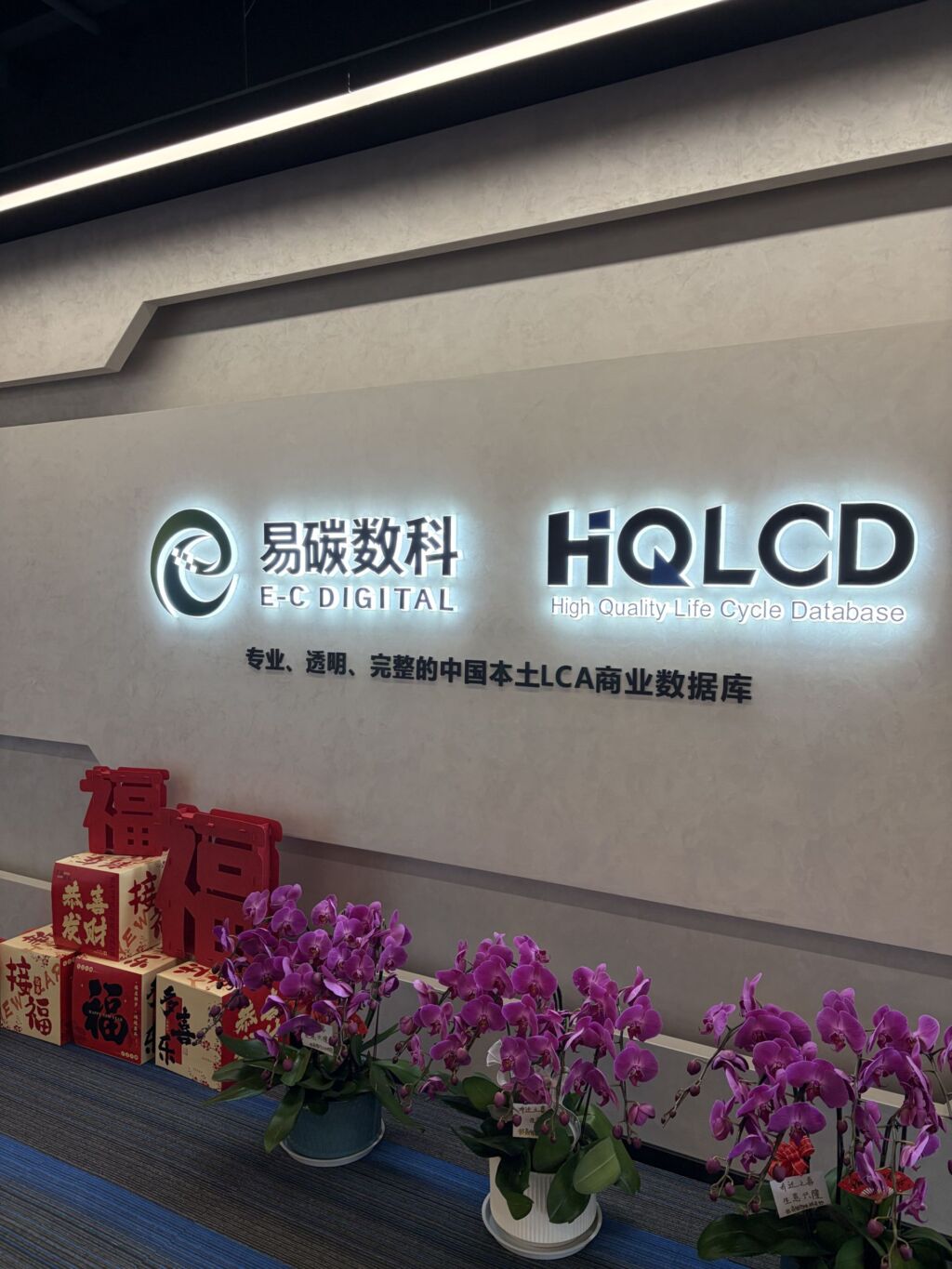
HiQLCD and EC Digital logos in office

The HiQLCD Office

Johnson Gui LCA Interview quote

Ondrej, looking ahead, what further developments do you envision to strengthen and expand the collaboration?

Powering the Jimu LCA tool with ecoinvent data is already a major step forward, but we need to think bigger. China’s carbon-intensive industries are represented by huge, partially state-owned enterprises. We need to find new, innovative licensing models. Think bigger, better. This will ultimately support Johnson in selling enterprise cloud applications to these critical players.


Finally, the next step is to sit together and think more broadly about combining data assets across geographies, and then to ensure a productive and forward-looking approach regarding AI applications.


Johnson, what qualities are your customers looking for when it comes to their data?

Customer expectations around data quality have evolved significantly. In the past, many companies simply wanted a carbon footprint value. As long as they had a number expressed in CO₂ equivalent, that was considered sufficient.


Today, that mindset has changed. More and more clients care deeply about the quality of the underlying data—not just the final value, but what sits behind it. They want to understand the data sources, the assumptions, the modeling approach, and whether the results are credible and defensible.


As a result, transparency, full documentation, and consistent methodology have become key requirements. Clients increasingly recognize the importance of high-quality databases, such as ecoinvent, precisely because of their rigorous documentation, transparent processes, and well-established modeling standards.

Johnson Gui LCA Interview quote

This shift is also shaping our own work. We are focused on providing high-quality, well-documented data to the market, aligned with the same principles of consistency and transparency. In this context, ecoinvent is widely regarded as the leading reference, and its acceptance in the Chinese market continues to grow.


At the same time, data quality alone is not enough. Proper use of high-quality databases requires education and clear guidance. In many cases, Chinese clients are willing to use these databases correctly, but they need better explanations, training, and support. As adoption increases, providing education and sharing best practices across the community becomes just as important as the data itself.


Johnson, can you provide some examples of how your customers leverage your technology to meet their sustainability goals?

Today, most of our enterprise customers require private cloud or on-premise deployments. This is a distinctive feature of the Chinese market—large companies need their LCA and carbon management systems to be fully integrated into their internal IT infrastructure, with ecoinvent data securely embedded within their own environments. Working closely with ecoinvent, we have developed a private cloud solution that meets these requirements while maintaining full data integrity and licensing compliance.


A good example is our work with Baosteel. Together, we developed what we believe is the first real-time carbon labeling system in the steel industry. Before this system was implemented, Baosteel had a dedicated LCA team of five people who could calculate the carbon footprint of about nine complex steel products per year. Annual updates were already difficult, as the calculations were done using traditional LCA software.


After implementing the real-time carbon labeling system, Baosteel can now calculate the carbon footprint of approximately 330,000 steel products per month at just one factory—the Baoshan facility. This factory alone produces close to 10 million tons of steel per year. Compared to fewer than ten products annually, this represents a dramatic improvement in both scale and efficiency.


The system has been verified by TÜV and integrates data from more than twenty internal systems, including financial systems, energy and environmental systems, manufacturing execution systems (MES), and supply chain systems. These data are collected, cleaned, preprocessed and then fed directly into the LCA models, enabling near real-time results. This will also be very valuable for regulators and local governments. More granular and up-to-date data support better decision-making, more accurate management, and more effective progress toward sustainability goals.


We see a clear trend: industry leaders are moving toward real-time, high-resolution carbon labeling systems. These systems go beyond traditional LCA software by providing faster, more granular results and enabling batch- or contract-based carbon footprint calculations.

Johnson Gui LCA Interview quote

Looking ahead, we believe real-time carbon labeling will become a standard requirement for new factories and production systems. From around 2027, local governments in China are also expected to introduce clearer requirements related to carbon emissions and carbon intensity at the regional level. These requirements will be passed down to individual companies and even reflected in management KPIs.


Johnson, tell us about your latest package for corporate businesses, how ecoinvent data is involved, and the benefits for your users.

ecoinvent is widely recognized as one of the most reputable and high-quality life cycle databases in the world, and we consider ourselves very fortunate to work closely with ecoinvent to bring this level of data quality to the Chinese market.


As ecoinvent’s authorized partner in China, we are currently the only company that offers ecoinvent data through fully compliant licensing structures with transparent pricing and clear policies tailored to local market requirements. Together with ecoinvent, we have also innovated a private cloud deployment model that allows large enterprises to integrate ecoinvent data securely within their own IT infrastructure—a critical requirement for corporate clients that place a strong emphasis on intellectual property protection, data security, and regulatory compliance. For these companies, using high-quality and well-documented data through authorized channels is not optional—it is essential.

Johnson Gui LCA Interview quoteFor that reason, we prioritize ecoinvent data across our corporate packages, alongside our own high-accuracy datasets where appropriate. Our approach is to maintain quality step by step, rather than relying on generic emission factors or low-transparency databases. For us, ecoinvent represents quality, credibility, and long-term trust.


Beyond large enterprises, we are also focused on accessibility. Last year in Shanghai, we worked to integrate ecoinvent data into a local public service platform, allowing more small and medium-sized enterprises to access professional LCA calculations. While industry leaders often have dedicated LCA teams and already understand the value of ecoinvent, smaller companies typically lack these resources—even though medium-sized private enterprises account for around 70% of employment and a significant share of real economic activity.


Ultimately, we believe ecoinvent is the reference choice for high-quality, general-purpose LCA databases. As ecoinvent’s authorized partner in China, we are committed to helping companies of all sizes access, subscribe to, and properly use ecoinvent data. Looking ahead, we hope to deepen our collaboration further—expanding both the reach and the depth of ecoinvent’s presence in the Chinese market, and ensuring that sustainability data of the highest quality is available to every company that needs it.


Johnson, what is your team looking forward to in the next year or two?

Over the next year or two, our focus is on two main priorities.


First, we want to continue educating the market and expanding access to professional LCA methodologies and high-quality databases. Many of these companies do not have in-house LCA expertise or the resources to build dedicated sustainability teams. Helping them adopt credible, professional approaches to sustainability remains a key goal for us.

Second, we are actively exploring how AI technologies can be applied to LCA and sustainability more broadly. Our aim is to use AI to make LCA tools even more accessible, efficient, and affordable, without compromising data quality or methodological rigor. We see significant potential in this area in the near term.


Beyond China, we also hope that more companies globally—especially those directly or indirectly connected to Chinese supply chains—will benefit from access to more granular, up-to-date, and China-specific life cycle data. Supporting better decision-making across global value chains is an important part of our longer-term vision.


Interested in becoming an ecoinvent partner? Contact us.

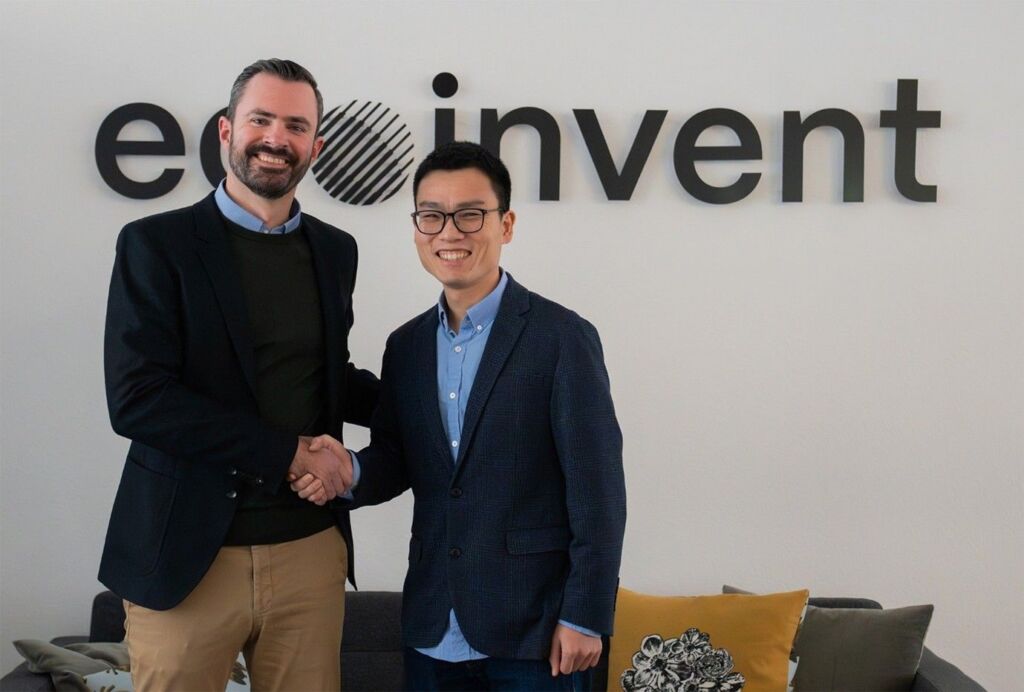
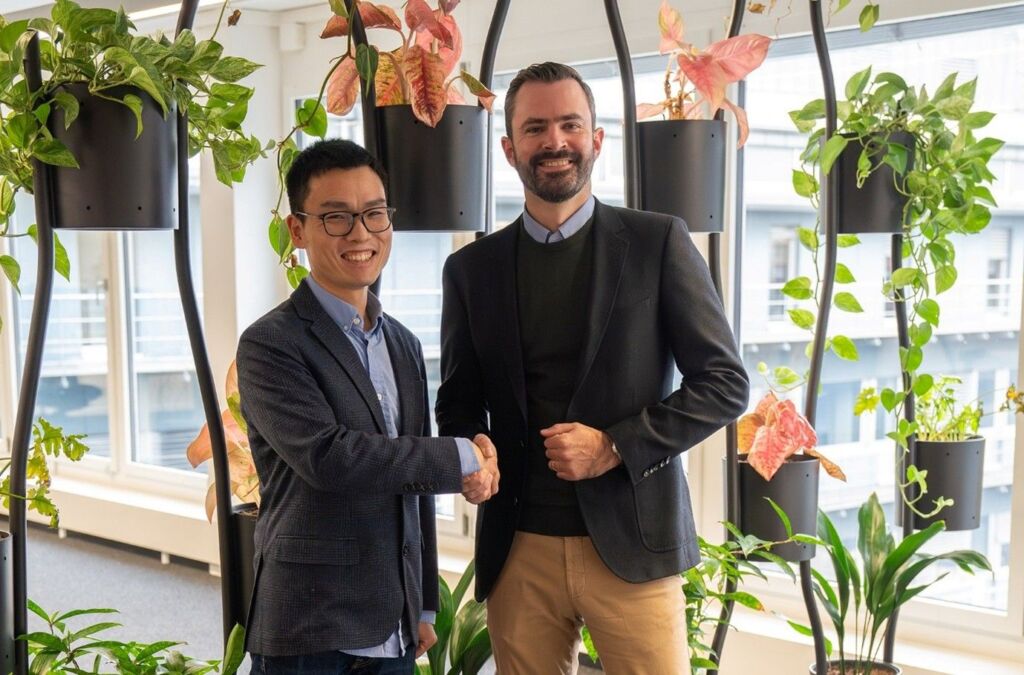
Ondrej Szabo (ecoinvent) and Johnson Gui (HiQLCD) meeting.

Persefoni is a leading Sustainability Management SaaS and AI platform, designed to meet escalating regulatory and stakeholder expectations around sustainability. They help companies and financial institutions to measure and manage carbon emissions with precision, to generate trustworthy and audit-ready sustainability reports, and to engage supply chains for decarbonization strategies.


In this interview, Caroline explains the benefits for clients when integrating ecoinvent’s detailed life cycle data into Persefoni software to enhance supply chain assessments. Her experience in guiding clients through their carbon accounting journeys shines through in her responses, which always keep the client in mind.


Read on to discover where Persefoni meets ecoinvent.

1. Caroline Bartlett, please tell us a bit about your background and what led you to the sustainability sector.

My path into sustainability began with a love for ecology and conservation biology, which shaped my academic focus. However, I quickly realised that achieving real, wide-reaching impact required working with businesses to help transform their practices. Nearly two decades ago, I transitioned into environmental consulting before recognising that scalable impact would come through technology—making high-quality emissions data accessible to every organisation.


2. What does your role at Persefoni entail?

The climate reporting landscape is constantly evolving, and staying aligned with the latest science and standards is critical. In my role, I guide clients along their carbon accounting journeys—whether they’re just getting started and need foundational support, or are more advanced and seeking to refine complex, detailed analyses.


Equally important is ensuring our software evolves in step with regulatory changes. Together with our team of climate experts, I help feed market insights and client needs back into our Product team, ensuring Persefoni remains ahead of the curve.


3. What makes Persefoni AI such a powerful tool for understanding environmental impacts?

Our platform simplifies carbon accounting by streamlining data ingestion and delivering fast, accurate GHG calculations using globally recognised methodologies like the GHG Protocol and PCAF. Built-in artificial intelligence (AI) automatically flags anomalies and processes thousands of transactions in seconds, removing the need for manual interventions behind the scenes.


Insights are presented through intuitive dashboards and automated reports aligned with leading frameworks and standards such as the CSRD, CDP, and SECR, enabling clients to move from data to disclosure with confidence.


4. How was the partnership with ecoinvent established? How do Persefoni’s customers use ecoinvent data through your solutions?

ecoinvent is widely regarded as one of the most robust and trusted sources of life cycle GHG emissions data (amongst other data!). It was important to Persefoni to ensure our customers could access this level of granularity and transparency.
 

persefoni quote 1


Persefoni clients typically use ecoinvent to enhance supply chain assessments, enabling them to identify emissions from specific purchases (across thousands of products, components, or raw materials, to name a few). This allows for a more refined, process-specific view of emissions.


5. From your experience, what are the biggest challenges companies face when trying to account for their emissions? How does Persefoni help to address these challenges?


Data is the most common challenge. Knowing where to source it, how to process it, and which emissions factors to apply. Persefoni addresses these challenges in several ways:


– Accessibility: We offer Persefoni Pro, a free, self-guided carbon accounting tool available to any organisation. It runs on the same calculation engine as our enterprise platform, democratising access to high-quality emissions measurement. It also enables supplier and portfolio engagement to enhance Scope 3 data quality.


– Breadth of data: Our platform includes over 150,000 emission factors, from global spend-based models to regional databases and granular LCA datasets like ecoinvent, ensuring organisations can use the most appropriate data for their needs.


– Expert support: Our climate experts and Customer Success teams are always available to assist clients in improving data quality, methodologies, and output accuracy.


6. Your platform uses a variety of emissions data sources—what role does a premium dataset provider like ecoinvent play in this mix?

It’s essential that customers have access to a broad range of emissions data to meet them where they are on their climate journey. For those just starting out, who may not yet have access to detailed or granular data, broad datasets help them understand the materiality of their impacts and identify where to focus their efforts.


However, that’s only the first step for many organisations. For companies looking to truly decarbonise or set and achieve science-based targets, it becomes critical to go beyond averages and access datasets that distinguish between different technologies and processes.
 

persefoni quote 2


This is where premium datasets like ecoinvent add significant value. Many of our clients operate in complex sectors such as manufacturing or chemicals, where even small variations in ingredients or production methods can result in substantial differences in emissions. Having access to detailed, process-specific data enables these organisations to pinpoint those differences and make more informed, impactful decisions.


7. Data transparency is very important to ecoinvent. Please could you share some insights on the importance of data transparency on your platforms, and Persefoni’s thoughts on how data transparency builds trust and creates value for clients?

Data transparency is no longer a ‘nice to have’ in carbon accounting. Many Persefoni clients use our platform to meet regulatory reporting obligations, and data audits are becoming standard practice. That means the emission factors used, as well as the methodologies applied, are often checked and challenged.


Transparency is embedded in the foundation of Persefoni’s platform. Clients maintain full ownership of their data, including every decision around methodology and emission factor selection. All transactions are captured within our Carbon Ledger—a fully downloadable, audit-ready record of every data point uploaded. This includes details such as original inputs, applied conversions, selected emission factors, and a complete audit trail showing user IDs, timestamps, and any edits made.


This level of transparency not only supports compliance—it also builds trust, improves data quality, and ultimately enables organisations to take credible climate action with confidence.


8. Many emissions calculations rely on spend-based data. Can you walk us through the key differences between spend-based and unit-based accounting, and what advantages you see when clients transition to unit-based approaches using datasets like ecoinvent’s?

Spend-based analysis is often a useful starting point for estimating emissions, particularly for companies early in their carbon accounting journey. It works by multiplying the amount a company spends on a good or service by a relevant spend-based emissions factor, often derived from environmentally extended input-output models. This approach offers a high-level view of emissions, particularly across the supply chain, but it comes with limitations. Critically, it assumes that all suppliers and products within a given sub-sector have similar carbon intensities, which is rarely the case in reality.


Unit-based accounting, on the other hand, uses actual quantities, such as kilograms of material or litres of ingredient, to estimate emissions. Because it’s based on physical activity rather than financial spend, it is not distorted by price fluctuations, inflation, or procurement dynamics. When paired with high-quality life cycle assessment (LCA) data, like that provided by ecoinvent, unit-based analysis enables far greater precision, offering emissions factors that are specific to particular technologies, production methods, and geographies.
 

persefoni quote 3


To illustrate the difference: imagine purchasing one tonne of fabric. A spend-based approach might apply the same emissions factor per euro or pound spent, regardless of whether the fabric is cotton or silk, whether it was purchased at a premium due to demand spikes, or secured earlier at a discount. A unit-based approach, however, takes into account the specific material, production region, recycled content, and even the weave or knit, providing a much more accurate reflection of its true carbon footprint.


9. In what ways does having access to unit-based emission factors influence the kinds of strategic decisions your clients can make?

Most of our clients are aiming for more than just compliance-driven carbon reporting—they’re committed to actually reducing their emissions. Whether this is motivated by internal leadership, investor scrutiny, or evolving regulatory and public disclosure requirements, there’s a growing expectation for accountability and measurable progress.


For many companies, the bulk of emissions sit outside their direct operations, typically within the supply chain (though this varies by sector). This makes access to accurate, unit-based emissions data critical. It provides the level of specificity needed to set credible targets, identify material emissions hotspots, and take meaningful, data-informed steps towards decarbonisation.


At Persefoni, we’ve seen clients use granular unit-based emission factors to inform a wide range of strategic decisions, from product redesign and material selection to manufacturing process improvements and increased use of recycled inputs. By moving beyond estimates to precise, activity-based data, organisations can align carbon reduction strategies with their operational realities and drive tangible climate impact.

persefoni quote 4

10. How do you help clients balance the trade-off between completeness and accuracy in their emissions inventories?

The GHG Protocol, widely regarded as the world’s leading greenhouse gas accounting framework, is built on five key principles: Relevance, Completeness, Consistency, Transparency, and Accuracy. Striking the right balance between completeness and accuracy is essential but can be challenging, particularly when navigating fragmented data or Scope 3 emissions.


At Persefoni, we support clients in managing this trade-off by providing access to a wide range of emissions factors and multiple methodological approaches. Many organisations begin with spend-based data to gain a comprehensive, top-down view of their emissions. This offers a high level of completeness, even if the initial accuracy is limited.


From there, clients can identify material emissions sources and begin refining their estimates using more precise, unit-based emission factors. To take it a step further, our Data Exchange module and Persefoni Pro enable companies to directly engage their suppliers and portfolio companies, unlocking supplier-specific data where available and appropriate, and further improving accuracy.


As we often say in this space, nothing is ever black and white. The most accurate and complete inventories typically blend multiple approaches. Managing that complexity manually can be resource-intensive, which is why technology is so important. Persefoni’s platform automates best practices, streamlines data management, and helps clients build GHG inventories that are not only robust and credible but also time- and cost-efficient.


11. How do you see the field of emissions accounting evolving over the next few years, whether in response to regulations, stakeholder pressure, or corporate ambition? What shifts do you think will define the next wave of best practices?

Emissions accounting has advanced rapidly in recent years, and that momentum shows no sign of slowing. Amid ongoing regulatory shifts across Europe, North America, and beyond, companies that embed best practices, such as prioritising primary data and adopting precise, unit-based methodologies, are emerging as the most resilient and future-ready.


Looking ahead, we expect to see increased scrutiny and a clear move away from basic disclosure towards high-integrity climate data as a core business asset. There’s a growing convergence around international standards like those set by the ISSB, which are significantly raising expectations for transparency, traceability, and auditability.


In this next phase, organisations will need to go beyond estimates. They’ll be expected to justify methodologies, provide robust data trails, and demonstrate the use of verifiable, activity-level data. This evolution will not only enhance the credibility of climate reporting but also sharpen its strategic value, enabling more informed, accountable decision-making.


12. With the launch of Persefoni Pro as a free, self-guided platform, how do you see its role in shaping the sustainability reporting market?

Persefoni Pro is designed to lower the barriers to entry for carbon accounting, making it possible for any organisation, regardless of size, expertise, or budget, to begin measuring and understanding their emissions. By offering a free, self-guided platform powered by the same calculation engine used by global enterprises, Persefoni Pro helps democratise access to high-quality emissions data and GHG reporting capabilities.


Its impact extends beyond individual users. Large organisations can now more easily engage their suppliers and portfolio companies in climate disclosure efforts, improving the quality and completeness of Scope 3 data across their value chains. This kind of scalable, bottom-up engagement is essential for credible decarbonisation planning.


In shaping the market, Persefoni Pro is redefining what’s expected from sustainability tools: transparency, accessibility, and alignment with global standards, all without requiring a team of experts or expensive consulting support. As reporting requirements become more widespread and stringent, tools like Persefoni Pro will play a vital role in enabling more organisations to participate meaningfully and confidently in the climate disclosure ecosystem.


13. How can readers engage with Persefoni to deepen their understanding of carbon accounting and sustainability reporting?

One of the most accessible ways to engage with us is through Persefoni Academy, our free, on-demand learning platform designed to help organisations globally to build confidence in carbon accounting, climate disclosure, and sustainability strategy.


The Academy offers a range of expert-led courses that walk users through the fundamentals of emissions measurement, carbon accounting standards like the GHG Protocol and PCAF, and practical application of climate data in business decision-making. Whether you’re just getting started or looking to strengthen your existing knowledge, the content is structured to meet learners where they are.


It’s not just for Persefoni users; Persefoni Academy is open to anyone looking to better understand the carbon accounting landscape. It’s part of our broader mission to empower more people with the skills and knowledge needed to take credible climate action. And for those who complete the courses, certificates of completion are available to demonstrate growing expertise in this evolving field.


The ecoinvent team gathered in tropical Zurich heat for our quarterly team meeting. This meeting was especially unique as we were joined by a panel of passionate representatives from local partners who work directly with our data.


Let’s take a look at what’s involved in an ecoinvent team meeting.

Partner Panel: Real User Insights

We welcomed four partners, including Sika, Helbling, and ECOSPEED, who represent different aspects of our ecosystem. Their representatives included sustainability experts (who work directly with our data) and software developers (who integrate our data into specialized tools).


ecoinvent Account Manager Margaux Cepeda hosted the panel, where the partners shared unfiltered feedback about their experiences, challenges, and future expectations.


This direct exchange proved invaluable. Some of our teams regularly interact with our partners, but for many team members, this was a unique and valuable chance to learn in-depth from our users about real-world applications and current user requirements.


For our partners, this was an opportunity to connect directly with the experts behind the data. They shared their experiences working with us and gained insights into the interesting challenges we face in prioritizing diverse industry needs.


Following the panel, we dove into questions from the ecoinvent team, who were curious to learn more about the various ways our visiting partners interact with our life cycle inventory database.


The messages from this meeting will surely inspire us in the months to come!

Looking Forward

The honest dialogue between data creators and data users revealed practical insights that will shape our strategy moving forward. One thing is certain—collaboration will be necessary to develop a green future.


Watch our video below for a peek into our Q2 ecoinvent team meeting, including words from our management team, partners, and panel host.

Watch: Our Partner Deep Dive
Photo of ecoinvent's q2 2025 team meeting with partner panel

There is still so much work left to do, but we are stronger together. If you’re an organization interested in supporting a sustainable mission, learn more about our partnership agreements.


If you’re an individual looking to join an organization dedicated to sustainability, discover our open positions on our careers page.


For more regular updates about the ecoinvent team, subscribe to our newsletter.

Portrait of Eric Mieras, Managing Director at PRé, with PRé logo on the right.

PRé provides fact-based sustainability to its users through knowledge and software. Like ecoinvent, PRé’s history in the sustainability sector spans decades, so they understand the importance of data transparency for environmental assessments.


In this interview, Eric Mieras, Managing Director of PRé and a professional at the intersection of sustainability, technology, and professional services, explains how PRé’s partnership with ecoinvent has evolved over the last two decades. His insights include discussions on the growing value of LCA, the current necessity for transparent, high-quality data, and the adaptability of ecoinvent’s unit process data.


Eric also shares some details from PRé’s latest offering, SimaPro Synergy—a product that incorporates ecoinvent data as part of its offer to provide scalable LCA calculations, data integration, and transparent environmental metrics.


Read on to discover where PRé meets ecoinvent.

Eric, please tell us a bit about your background and what led you to the sustainability sector.

My journey started in 1990 when I studied Environmental Science at university. I have even been a student assistant teaching the course, “Interdisciplinary and Science Theoretical Aspects of Environmental Science.” I was lucky that this was the early days because I don’t think they would have let me teach this course otherwise. Afterwards, I held a wide variety of roles but in the years before joining PRé, those focused on the intersection of Sustainability, Technology and Professional Services, which also sums up what PRé is doing. My drive to change how businesses operate towards a more sustainable model has been a common factor throughout all those years.


What does your role at PRé entail?

As the Managing Director, I’m responsible for the vision and strategy of the company. To me, the company culture is an important part of that as well. In the end, it is our people who put our vision and strategy into action. I see my role as providing the fertile ground on which our people can thrive and have a positive impact.


Please describe PRé’s core activities and services, including the SimaPro software.

We see ourselves as an Intelligence company that provides LCA-based insights through knowledge, data, and software. The knowledge is our consulting team that focuses on capacity building for clients as well as methodological development and guidance. The software is, of course, SimaPro, and the data is something we do together with partners, of which ecoinvent is the most important one, so our users can build their models.


What makes Life Cycle Assessment (LCA) such a powerful tool for understanding environmental impacts, and how has the field evolved over the years?

LCA provides insights to not only report and set targets but also to improve sustainable performance and innovate products. That enables you to not only report and be compliant but also to create value by designing and producing more sustainable products. The thoroughness of LCA allows companies to truly understand what is driving the environmental impact and make decisions for lasting changes. That is why we believe that the current boom in emission-based factors will serve as a stepping stone for the LCA field in the long run. As companies start with these simpler metrics, many will soon seek deeper and more actionable insights, naturally leading them to LCA. The data transparency that LCA provides is not a nice-to-have; it is a necessity.


Quote from the blog, reading "The data transparency that LCA provides is not a nice-to-have; it is a necessity."

How was the partnership with ecoinvent established, and how does PRé use ecoinvent data?

One of the first databases we included in SimaPro in 1992 was the Swiss BUWAL (Bundesamt für Umwelt, Wald und Landschaft) eco-inventory. This was a big step ahead at the time, bringing more information together into a single database. Later on, this database became known as ecoinvent, a more professional version. Interestingly, at the time, the BUWAL inventory didn’t even include anything about CO2 or climate change. That wasn’t a priority back then. We had to add all that by hand.


Ever since, ecoinvent has been the primary background database in SimaPro. People use it to build their own LCA models in SimaPro that provide them with the specific and transparent results they need to drive sustainable change.


Tell us about your latest software product, SimaPro Synergy, and how it integrates ecoinvent data.

Let me take one step back first. The demand for LCA has exploded over the last couple of years. That means that we cannot keep working like we have always done. With SimaPro Synergy we aim to innovate the process while experts keep full control over the data and the models in SimaPro. For this, we automate the data collection and the reporting parts of the process by tapping into the existing systems and processes of organizations to put it into the hands of the end users of the sustainability metrics. What remains is that experts can create and maintain their models in full detail. This is where the value of LCA is created, while the time-consuming parts of LCA are automated.


It is these models where ecoinvent comes in. The models are built including background datasets from ecoinvent. A great example is our collaboration with Autodesk in creating the EcoDesigner app, which uses ecoinvent datasets. By integrating Autodesk Fusion with SimaPro Synergy, the app helps product designers to easily incorporate sustainability into the design process, providing instant insights into the environmental impact of each design iteration. That’s how we see the way forward.


SimaPro Synergy aims to scale and integrate life cycle assessment into day-to-day decision-making. Please explain to our readers why it is so important to achieve this, and how can high-quality data drive more sustainable choices.

Having insights into the footprint of products available in the daily work process enables people to take this into account. In that sense, the phrase “what gets measured, gets managed” is still applicable. That is why we believe this is essential. However, if you want to do that, you need to make these insights scalable by innovating the process. If not, the expert would need to provide this on request and increasingly become the bottleneck for the sustainability metrics. Not only can this situation place considerable stress on the individual, but it may also compromise the broader value that LCA is meant to deliver.


That doesn’t mean the expert doesn’t have a role to play. Actually, the role becomes even more important as the LCA expert will safeguard the quality of the data and models that are being used for these scalable, automated calculations. Both ecoinvent and SimaPro are essential pieces of the puzzle to provide high-quality data, as well as the tools that allow companies to constantly improve the quality of their data and adapt it to their improved products and operations. Ultimately, this leads to an iterative process of continuous improvement.

Quote from the interview, reading, "Both ecoinvent and SimaPro are essential pieces of the puzzle to provide high-quality data, as well as the tools that allow companies to constantly improve the quality of their data and adapt it to their improved products and operations."

Data transparency is very important to ecoinvent. Please could you share some insights on the importance of data transparency in SimaPro Craft and PRé’s thoughts on how data transparency builds trust and creates value for clients?

It is important for us as well. A few weeks back, I spoke to someone who got their footprint from a tool without knowing where it came from, how to use it, or what could be done to improve it. If you want to operationalize your sustainability strategy, you really need to know what levers to pull, and for that, transparency is key. Only if you can drill down in the value chain can you identify your hotspots. Knowing your hotspots gives clear guidance on what you can—or need—to improve. That’s one aspect.


Next to creating value, you also want to be able to review, verify, and check your data. If the data is a black box, you get a result, but you don’t know where it comes from. Only if you can look at the sources, the choices that have been made, and so on, can you trust the data. And that is key.


Lastly, the possibility to adapt a dataset to make it company- or supplier-specific is essential to make the LCA results more accurate and representative for your company. This is something you can do with the unit process data that ecoinvent provides.


Tell us about your experience working with the ecoinvent team.

The collaboration with the ecoinvent team has always been very close, from Nic as CEO to Emilia (CTO), Lucia (Database Product Manager), and many others across both organizations. Of course, a lot has changed since the time that both of our organizations were still small groups. That growth journey has also brought a lot of positives and professionalized the way of working. At the same time, the personal connection remains most important. I’m really happy that teams from both PRé and ecoinvent will participate in the Climate Classic this year, a Dutch cycling race along what would be the future coastline, as a way to fight climate change.


With growing regulatory pressure on industries to reduce their environmental impacts, how do you see the role of LCA and data integration evolving over the next five to ten years?

I think reporting is the main driver now, although it also slowed down a bit given all the recent developments, while innovation and performance will be the key drivers going forward. In the end, reporting is the result of all the actions taken by a company, and products are the levers companies can pull to become more sustainable. That is also why embedding it in the daily work is key. And once you start improving your products and processes, you want to see that reflected in the data and models that you use. LCA and data integration are both key aspects to deliver on this promise. That means that LCI data and LCA models will (have to) become more flexible and dynamic. In my opinion, that will be the big move: from static to dynamic data and models.


Is there anything else you would like our readers to know?

At PRé, we believe we can achieve more together. That is why we aim to contribute to a vibrant ecosystem of companies in this space. That mindset was also the driving factor behind the successful partnership with ecoinvent. Don’t hesitate to reach out if you want to know more. Always happy to have a chat about this when attending conferences, with a cup of coffee, or virtually. Those conversations often lead to great insights to both, and can accelerate the innovation of our beloved field!


If you’re interested in staying in the loop, subscribe to our newsletter for quarterly updates, industry insights, and opportunities to connect.

Lifecycles interview graphic with Tim Grant

Lifecycles has played a key role in bridging the gap between sustainability knowledge and practical implementation. One of their most impactful contributions is the Packaging Impact Quick Evaluation Tool (PIQET), designed to simplify LCA assessments for packaging decisions. PIQET integrates ecoinvent emission factors to enhance its analytical capabilities, enabling users to make informed choices based on robust, high-quality data.


In this interview, Tim shares insights into his journey, the evolution of LCA, and how Lifecycles’ partnership with ecoinvent enhances their work. He discusses the importance of accurate data in driving sustainable packaging solutions, the challenges businesses face in assessing environmental impacts, and the growing role of LCA in meeting regulatory and corporate sustainability goals. Tim also offers valuable advice for organizations starting their sustainability journey and highlights upcoming initiatives and training opportunities from Lifecycles.

Tim, please start by sharing a bit about your journey and how Lifecycles was founded.

I got interested in LCA when I started at RMIT University in Melbourne. The research center I was in, the Centre for Design, was a dynamic, industry-focused group where you did what you wanted as long as it had a strong sustainability theme and you could find companies or research funding to support it. I was pointed to an old PC in the back office with SimaPro Version 2 installed and told to work on Life Cycle Assessment (LCA) projects, and from this point on, I never looked back. RMIT was fantastic, but as a university, there were restrictions on the type of projects we could take on, so in 2003, I started Lifecycles to expand on who we could work with on projects big and small.


Please describe Lifecycles’ core activities and services, including the PIQET tool.

With over 20 years of experience, we’re Australia’s leading provider of LCA, sustainability metrics, and circular economy studies. We also focus heavily on training and tool development, ensuring businesses and governments can access the best sustainability knowledge in Australia and internationally.


At Lifecycles, we act as enablers of science-based environmental decision support. We try to fill the gaps that make it difficult for students, companies, and organizations to use LCA. Sometimes, the gap is skill and knowledge, so we provide training. Sometimes, it’s data, so we develop inventory. Sometimes, it’s access to LCA answers, so we develop LCA tools and software.


We also do many LCA projects that help answer questions and support our ability to deliver training, data, and tools. This is where the PIQET tool comes in. The Packaging Impact Quick Evaluation Tool (PIQET) embodies all the science and experience we have accumulated from over 25 years of consulting and data development. At the same time, it incorporates nearly 20 years of packaging industry user experience, which we have incorporated into our latest release.


What makes Life Cycle Assessment (LCA) such a powerful tool for understanding environmental impacts, and how has the field evolved over the years?

I think the power of LCA is in its coverage of space and time—impacts from across supply chains, country and organizational borders, and between generations. It is an extremely ambitious tool, aiming to include everything relevant and distil this into useful information to support decisions.


LCA is invaluable because it brings data-driven analysis into early-stage decision making.  Instead of relying on gut feeling or a quick Google search, LCA helps test ideas under a microscope, showing the real impact of material choices, supply chain decisions, and product design.


What’s interesting is how the field has matured. Early on, LCA was primarily used for academic research or compliance. Today, businesses use it as a proactive tool to drive sustainability strategies—the LCA literacy across industry is much greater today than it was even five years ago. More organizations are embedding LCA thinking into product development, which is a big step forward.


Lifecycles integrates ecoinvent emission factors into PIQET. Can you walk us through how this integration benefits the tool’s users?

We regionalize ecoinvent data across 54 regions, building on the internal regionalization already provided in ecoinvent. We aim to make as few modifications as possible, as one of the most potent benefits of ecoinvent is its reputation in the market as the most extensive third-party database focusing on consistency and transparency.


The structure of the unit process database means that any improvement to a particular sector flows through to all other sectors. It also allows us to investigate any counterintuitive results to understand how impact results evolve from version to version.


PIQET aims to simplify LCA assessments for packaging options. Why is it so important to focus on packaging, and how can high-quality data drive more sustainable packaging choices?

Packaging plays a huge role in product protection and environmental impact, making it one of businesses’ most visible sustainability challenges. With the push towards circularity, recyclability, and reduced carbon footprints, having accurate, high-quality data is essential for making the right material choices.


PIQET makes LCA accessible and practical, helping businesses compare different packaging scenarios, understand trade-offs, and design for sustainability from the outset. By using robust, science-backed data, companies can avoid greenwashing, comply with regulations, and reduce their impact.

Life cycles interview quote

How was the partnership with ecoinvent established, and how does Lifecycles use ecoinvent data?

Lifecycles has been involved in data development for 25 years, and this has involved us initially trying to follow the rules and procedures of ecoinvent when developing the Australian Life Cycle Inventory Database – AusLCI. PIQET initially drew heavily on AusLCI processes, but as we began addressing the broader global market, it became clear we needed ecoinvent as the backbone of our calculations.


We now start with the most recent version of ecoinvent data and build on top all the additional materials, manufacturing, and waste management processes required by PIQET.  We also regionalize the underlying processes one layer down the supply chain before we allow the ecoinvent global supply to take over.


Tell us about your experience working with the ecoinvent team.

We’ve worked closely with ecoinvent for over three years, both as users and suppliers of LCI data. We got great insights into ecoinvent when working on submissions of Australian agricultural datasets. Seeing how strict the entry rules are, to ensure the conventions in ecoinvent are met, and then working through the review process gave us an understanding of the rigor behind the database.


With growing regulatory pressure on industries to reduce their environmental impacts, how do you see the role of LCA and data integration evolving over the next five to ten years?

While LCA has been used extensively for decision support, it will also play a significant role in reporting and tracking emission trajectories in the future. This is evident through the greater focus on Scope 3 emissions and Climate-Related Financial Disclosures. Over the next decade, demand for detailed LCAs will only increase, particularly for the harder-to-abate sectors.


At Lifecycles, we’re preparing for this shift by enhancing our tools and training programs, ensuring businesses have the data, skills, and frameworks to stay ahead of regulatory and market expectations.


I believe we will also see the re-emergence of other impact categories that have been sidelined with the singular focus on climate change. Once a strategy for net zero carbon becomes clear, ameliorating other impacts will come back into focus.


Are there any projects or initiatives you or your team look forward to participating in in the coming year(s)?

We’re particularly excited about integrating LCA into organizational footprinting, a key focus area we’re actively pursuing with PIQET. This initiative will enhance sustainability decision-making by providing deeper insights into packaging impacts within broader corporate sustainability strategies.


As the founder of Lifecycles, you’ve worked with many clients on sustainability projects. How do you guide them in selecting the right data and tools for their sustainability goals, and what advice would you give to businesses starting their sustainability journey?

We advise clients to always use a consistent set of data, and consistent boundaries, and to remember that all LCA data is a useful model but not absolute truth. What’s important is to look at the direction of results under different circumstances and to use those insights to design better products. Avoid having two fixed designs and trying to over-interpret a 10% or 15% difference. We also suggest using LCA with the design team as early as possible. Empowering the packaging designers to understand the environmental drivers will hopefully lead to better, more integrated solutions.


What are some common challenges you’ve encountered when working with clients to assess environmental impacts, and how does Lifecycles help address these challenges?

One of the biggest challenges is when the results don’t go the client’s way. They often have expectations of the environmental outcomes, and when the LCA suggests something different, the tendency is to blame the messenger, question the data, or question the indicator design. While it’s always good to question the data and methods, we must work with clients to understand some of the dynamics of the product and the background economy. Usually with patience, transparency and testing of model parameters, we come to a place of understanding and find a path forward.

Life cycles interview quote

Tell us about an upcoming event where our readers can connect with you or other experts from the Lifecycles team.


We run a range of training programs throughout the year, including: LCA 1.01, our foundational course covering key LCA principles; LCA 1.0, our advanced training using SimaPro; Lifecycles Lab, a rapid LCA workshop for startups and SMEs; and Packaging LCA Training, our newest course focused on packaging-specific sustainability challenges.


More details on all our courses are available on our website.


The best way to stay updated is to subscribe to our newsletter, which shares insights from conferences, industry trends, and updates on new developments at Lifecycles.


Is there anything else you would like our readers to know?

We offer a commitment-free, 15-day trial of PIQET to all new users. This also includes a live training session with one of our LCA experts.

I write these thoughts on a Friday afternoon from the shores of the San Francisco Bay. On my left, the Golden Gate Bridge peaks through the fog, while on my right, Alcatraz Island looms in the water. It’s an ideal place and time to reflect on my week in San Jose, attending Verge 24, a conference exploring the topic of deploying climate tech at scale.


My goals were to understand the drivers behind the U.S.-based sustainability market, the specific needs created by those drivers and the technological landscape, how ecoinvent currently meets these needs, and what a possible shared future could look like.


Firstly, I sought to understand why businesses in the U.S. care about sustainability. U.S. climate regulations aren’t as strict as in the European Union. The Securities and Exchange Commission (SEC) dropped Scope 3 reporting, and most other sustainability regulations are specific to California and need time to come into effect.


Interestingly, the EU’s Corporate Sustainability Reporting Directive (CSRD), which requires companies trading in the EU to report on the impact of corporate activities on the environment and society, is felt across the Atlantic and is frequently cited as a driver. This is because large enterprises tend to be active in both markets.


Other drivers include the 2022 Inflation Reduction Act (IRA), which grants tax credits for investments contributing to clean electricity and transport.


Some large tech corporations are also empowered by high margins and the conviction that we need to take care of this planet. These corporations set positive trends when they pay premiums for sustainable products.


Lastly, Verge 24 attendees cited end-consumer expectations as a driver for sustainable sourcing and production.


My second goal was to better understand what these companies are trying to achieve.


I discovered that the overwhelming majority of attending companies, keynotes, and panel discussions were focused on carbon. This is unsurprising and shows that other sustainability topics, such as biodiversity and social impact, have yet to take center stage at these kinds of events.

Nick Van Berckelaer banner graphic on yellow background.

Repeatedly, I heard discussions about low-carbon technologies, carbon removal, and carbon accounting in various forms: Accounting & Reporting (A&R), Product Carbon Footprint (PCF), Corporate Carbon Footprint (CCF), etc. Excitingly, many of the individuals I spoke to on these matters were already users of the ecoinvent database.


I also asked about the challenges they currently face in achieving their carbon-related goals, and the most common response was a need for more primary data and more specific background data. AI solutions are currently not sophisticated enough to address this problem fully, so businesses and individuals are finding creative ways to solve this challenge for their unique cases. Some build models on top of our data to modify parameters on semiconductors and batteries, others ship their physical devices to specialized supply chain forensics, and many buy and combine multiple data sources. This is where a comprehensive database like ecoinvent will have a bigger impact in the future.


At ecoinvent, we are committed to providing high-quality, transparent background data worldwide to support data-driven sustainability decisions. Our database continues to grow to support our users and offer a comprehensive overview of environmental impact. This month, we released our latest update, ecoinvent version 3.11 which brings a wealth of new and updated datasets covering a broad range of sectors. Our database will continue to support our users across the globe.


— Nick Van Berckelaer, Head of Software Product Development

IPC Interview graphic with Timothée Harvey and Catherine Colin

Life cycle data is essential for informed decision-making, helping companies assess the environmental impact of their processes and materials from production through disposal. However, reliable and up-to-date data specific to the plastics sector is often scarce, limiting the ability of industry players to perform accurate life cycle assessments (LCAs).


This is where the Industrial Technical Center for Plastics and Composites (IPC) steps in, focusing on creating high-quality, sector-specific datasets to support the plastics and composites industry’s shift toward more sustainable practices. Through its collaboration with ecoinvent, IPC can make these critical datasets accessible to a global audience, ensuring transparency and reliability in environmental data for the plastics sector.


By sharing high-quality life cycle inventory (LCI) data with ecoinvent, IPC empowers industry stakeholders to conduct more accurate LCAs, facilitating the adoption of sustainable materials and practices. This partnership not only strengthens the plastics sector’s sustainability efforts but also highlights the importance of collaboration in advancing environmental standards across global industries.


In this interview, IPC’s Timothée Harvey and Catherine Colin discuss how this partnership enhances IPC’s mission to bring the industry closer to a circular economy.

Timothée and Catherine, please tell us a bit about your backgrounds and what led you into the sustainability sector.

TH: I began my career in the automotive industry as a mechanical engineer, first in France, then in Spain and Belgium. I then had the opportunity to specialize in life cycle analysis following the resumption of my studies. This specialization led me to work in the sustainability department of the Industrial Technical Center for Plastics and Composites.


CC: I have combined expertise in project management, product design, and environmental sustainability. I gained operational expertise in environmental sustainability when I managed the Schneider Electric program for six years. In 2022, I joined IPC as a research program manager to lead the program on health and safety and low-impact solutions. My practical experience is helpful for the ongoing transition in the plastics processing sector.


Could you describe your roles at the Industrial Technical Center for Plastics and Composites (IPC) and how you contribute to the organization’s sustainability goals?

TH: My tasks at IPC are mainly focused on LCA and eco-design. The projects I lead can be specific to a company, such as implementing a product LCA, or they can be related to the entire plastics and composites sector to address more cross-cutting issues, like creating life cycle inventory data.


CC: At IPC, I develop future European or national projects to execute our research roadmap on health and safety for humans and ecosystems and solutions with low environmental impact. As IPC creates links between the plastic sector and environmental specialists, we are the perfect entity to create new LCI datasets to facilitate the execution of LCA in this domain. This is why I have increased the development of projects to create LCI datasets.


What are IPC’s main focus areas, and how does environmental sustainability guide your work across these activities?

CC: IPC has three core activities: research, services, and collective actions with IPC beneficiaries. Environmental sustainability is the primary domain of the IPC research program. The 2024 – 2027 program includes three axes: energy and ecological transition, digital transition—the industry of the future, and high-added-value products.


In what ways does IPC drive sustainability in the plastics sector, and how does access to reliable data support these efforts?

CC: IPC promotes sustainability in many ways, such as facilitating recycling, developing innovative alternatives, and reducing exposure to substances of concern. Research projects are accompanied by the practice of Safe and Sustainable by Design (SSbD) with a triple evaluation of environmental, economic, and social performance. To facilitate the implementation of alternative solutions with low environmental impact, IPC targets to cover 80% of plastic converting processes with recent and reliable LCI datasets. This gives industrial actors more awareness about environmental impacts and permits them to execute LCA with better data.


What are some key data collection challenges in your field, and how do you work to address them?

TH: Our project with ADEME to construct a life cycle inventory on composite transformation processes was the first of its kind within our company. This project highlighted the importance of trust in the project and the company carrying it out. The companies visited opened their doors and shared information only if they were convinced of the added value of making this data available.

IPC interview quote

How did the collaboration between IPC and ecoinvent come about, and how does IPC use ecoinvent’s data?

TH: ADEME requested collaboration with ecoinvent. For data consistency, ADEME wanted the data editing support to be provided by ecoinvent. Following this request, we had the pleasure of working with ecoinvent to construct data. We already used ecoinvent data in our service for LCA realization with the SimaPro tool.


What was it like working directly with the ecoinvent team on data projects?

TH: Working with ecoinvent allowed us to compare our data construction methodology with a team of specialists who could share their experience in the field. The ecoinvent team has always been available and attentive to our questions to advance the project as best as possible.


Why is accurate data from the plastics sector necessary for advancing sustainability practices in the industry?

TH: Our goal is to provide accurate data for the plastics sector we represent. Industrial actors often report that the data are too far from their processes or obsolete, which constrains them in realizing their LCA. We want to make this data available so industrialists can control their environmental impact and actively implement solutions.


What specific benefits does sharing IPC’s data with ecoinvent bring to IPC and the broader plastics industry?

TH: ecoinvent is a global reference for providing life cycle inventory data. Working with ecoinvent ensures our role as a technical center as we respond to the strong demand from the plastics sector for publishing environmental data. This partnership also helps increase the visibility of the work done.


What are the main challenges the plastics and composites industry will face in the next decade regarding sustainability?

CC: The key challenge for plastic composites is to improve their performance on the whole life cycle: from design to end of life. A new way of thinking and designing will be developed not only to increase the incorporation of recycled materials inside composite products but also to reduce uncertainties regarding their composition and potential risks, as well as gain efficiency in design and production for less energy consumption, low carbon performance, and longer life cycle.


What are the most impactful outcomes of IPC’s work for the plastics sector?

CC: A critical outcome of IPC’s work in the plastic sector is to facilitate getting high-quality recycled plastic materials for packaging, building, automotive, and medical device applications. This will require innovating on recycling technologies, especially on waste decontamination. It will also require higher awareness and better management of substances of concern along the value chain.


What advice would you give to other organizations looking to expand access to sector-specific data within their industries?

CC: We recommend not hesitating to get started with such sectorial data creation or renewal. Participating in the steering committee of ongoing projects can also be a way to discover the processes of creating LCI datasets. We also recommend using standard formats for LCI data. For us, ecoinvent is the best, knowing that the ecoinvent team provides excellent support!


Can you share upcoming events where readers can connect with you or other IPC experts?

CC: In the composite domain, IPC will attend FIP and JEC events in France. We participate in numerous events, and you can follow our activities and webinars on our website.

Mura interview graphic Geoff Brighty

Mura’s Hydro-PRT® technology transforms hard-to-recycle plastics into high-quality, fossil-replacement hydrocarbons for industry, helping close the circular economy loop. Yet, as the sector grows, one of its most significant challenges remains the need for trustworthy, transparent data to guide decision-making and build confidence in new technologies. Mura’s collaboration with ecoinvent is central to ensuring the credibility and transparency of its advanced recycling process. By integrating ecoinvent’s independently verified datasets into its Life Cycle Assessments (LCAs), Mura can provide stakeholders with high-quality, trusted data that supports the sustainability benefits of their proprietary technology.


In this interview, Dr. Geoff Brighty, Head of Sustainability and R&D at Mura, discusses how the company’s partnership with ecoinvent is helping to drive the industry’s transition to a circular economy and set a new benchmark for transparency and data integrity in the sector.

Geoff, please start by sharing a bit about your journey and how you got involved in the sustainability sector.

My career spans nearly 40 years, with 26 of those working for the Environment Agency – the primary environmental regulator in the United Kingdom. My life in the Agency included science and research management, policy, strategy, and operations. In this latter role, I was responsible for regulating the waste management sector and infrastructure, such as incinerators and landfills. What surprised me was that so little was being done about plastic recycling, with so much material heading for energy recovery.


I left the Agency in 2014 to become a sustainability consultant. I joined up with my good friend Jo Ruxton MBE, who had started the UK’s first plastic pollution charity, Plastic Oceans, now called Ocean Generation. While working here, I got interested in the state of plastic pollution and its impacts on marine life and our health. Following the release of our film, A Plastic Ocean, I led policy and technical solution-focused projects for the charity, and that’s how I became involved with Mura Technology.


What exactly does your role at Mura Technology entail?

My role as Head of Sustainability is to ensure we can demonstrate how Mura’s Hydro-PRT advanced plastic recycling technology delivers important benefits for the circular materials economy and climate through industrial-scale decarbonization of the plastics value chain. This is important for policymakers and the product and packaging value chain, which needs confidence in their LCAs.


Part of my role is commissioning science projects with our fantastic research partners, the Universities of Warwick and Ghent, where we generate new data that underpins our technology development and deployment at an industrial scale. The research includes generating data for Life Cycle Assessments of Mura’s process and evaluating a wider range of polymers that Hydro-PRT could process.


Can you explain Mura’s core technology and services, particularly how Hydro-PRT works and its potential to transform plastic waste management?


Mura has developed Hydro-PRT, an advanced (sometimes called ‘chemical’) recycling technology for processing waste plastics that are not considered recyclable via traditional mechanical processes and would otherwise go to incineration, landfill, or leak into the environment. These plastics are post-consumer (and so are considered contaminated), multi-layered, flexible, and rigid materials, so films are a prime example, alongside packaging such as yogurt pots and ready-meal trays.


Our first site will be operational in the UK in 2024 and will take waste from the UK, which means that in addition to diverting it into recycling, it will also be prevented from being exported. The waste for this site arrives in bales, which must be prepared via a series of process steps, including shredding and glass, metals, and non-target plastics removal. The mix is then heated and pressurized in an extruder and fed into the conversion unit. Our use of supercritical water as the agent of change makes us unique in the market – it breaks the carbon-carbon bonds in the plastic, donates hydrogen, and forms shorter-chain, stable circular hydrocarbon products that are sold to the petrochemical industry as a drop-in replacement for fossil oil.


The process creates a circular economy for plastic and replaces the use of fossil resources to manufacture new, virgin-grade plastics. It’s also inherently scalable, as the supercritical water surrounds the waste plastic. Mura’s first site in Teesside, Northeast England, will place 20,000 tonnes of liquid hydrocarbons onto the market annually.


Mura is developing several other sites in Europe, the USA, and Southeast Asia and sells licenses to the technology through our Global Licensing partner, preferred engineering partner, and investor, KBR. By 2032, Mura aims to have 1.5 million tonnes of advanced recycling capacity in development and operation.


How does Mura Technology contribute to sustainability in the broader recycling industry, and what role does data transparency play in building trust?

Coming from the NGO and regulatory sectors, I am passionate about building trust in Mura’s process and the benefits it can bring as we come to a commercial scale.


Advanced recycling technologies have shown immense promise in diverting plastic waste from landfills and incineration and reintegrating it into the production cycle, thereby mitigating the environmental impact of plastic consumption. Yet, despite their potential, these technologies have to earn the complete trust and confidence of regulatory bodies, non-governmental organizations, and consumers. We want to overcome this challenge.


Mura has set out four principles for the sector, drawing support from the entire value chain. Foremost of these are access to high-quality data relevant to LCA and independent verification of these data. We have done this by providing data to studies conducted by the European Commission’s Joint Research Centre and the Consumer Goods Forum. However, we know that responsible value chain members will need to conduct their own LCA and need confidence in any inventory data they use. That’s why we have worked closely with WMG at the University of Warwick and Innovate UK to generate the independent LCA model and, importantly, working with ecoinvent to conduct its peer review and incorporation into their Life Cycle Inventory (LCI) to support broad adoption.


We believe this partnership with ecoinvent enables commercial sustainability companies and their customers to use the data confidently. Moreover, we have agreed to continually update our data within ecoinvent as we develop the technology further and deploy it globally.


In your experience, what are the most significant data challenges faced by experts in your field, and how does Mura overcome them?

In generating models, we often work with design characteristics and expected loads; however, these need to be checked against the actual operation of the plant. We will likely see less energy consumption from some of the processes, such as the waste feed machinery not having to be worked at ‘normal’ operating speeds, to match the process flow of the Hydro-PRT plant. Overcoming these data challenges requires monitoring steady state operations over reasonable periods – which is crucial in providing our product off-takers with carbon intensity values for their Scope 3 assessments.


Moreover, LCA has a sense of false precision—it’s never that simple. For example, grid carbon intensity varies hourly, yet we always use annual averages. We are becoming aware that expressing carbon intensity as a range may be more informative to stakeholders. Above all, we should be open about this and develop a better understanding across the sustainability community about how best to calculate and interpret the values we generate.

Mura interview quote

How has Mura integrated ecoinvent data into its sustainability practices, and how does this support the company’s work?

The LCA model developed by WMG at the University of Warwick was published in an academic journal in 2023 – but we realized that commercial companies could not use the data in their client’s models because the data outputs had not been incorporated into a reliable LCI. One company then recommended that we engage directly with ecoinvent as they used their LCI.


We approached ecoinvent to see whether the data set – a first for advanced recycling – would be suitable for critical review and incorporation into the next ecoinvent database release, and we then embarked on a partnership approach.


Mura now uses ecoinvent datasets in LCAs for all of its sites, using OpenLCA as the modeling platform.


Why is accurate data critical for the future of plastics recycling, and how can it drive more sustainable practices across the industry?

As a new and energy-intensive sector, advanced recycling has already been challenged as not being sustainable from the outset.


Accurate data helps drive a complementary approach in plastic waste management, providing clear evidence to all stakeholders that waste material is being directed to the most appropriate processing technology. This will ensure we process as much plastic as possible, minimize carbon emissions, and generate low-carbon recycled oils for technically demanding products such as food-grade packaging and automotive components.


Can you share some insights into your experience collaborating with the ecoinvent team?

It’s been brilliant. Nikolia Stoikou, Project Manager at ecoinvent, has guided us through the assessment process and project status, holding meetings at regular intervals to exchange data and questions. We learned a lot from the process and gathered more data, including the carbon intensity of the actual plant build, to create a holistic view.


What are the key advantages of sharing your sustainability data with an organization like ecoinvent?

Firstly, it’s about provenance and confidence in the published datasets, following ecoinvent’s rigorous approach to quality assurance. It was equally important for Mura to have our data assessed this way.


Secondly, it’s about dissemination and uptake. Our data, published by a trusted source in ecoinvent, helps brands explore for the first time what advanced recycling can do to support their efforts on circularity and simultaneously reduce carbon intensity. This, in turn, enables companies to build sustainable business cases to meet their ESG targets.


Looking ahead, what projects or initiatives is the Mura team particularly excited about in the near future?

Our Hydro-PRT process design continues to evolve, scaling from the first plant’s 20,000 annual tonne capacity to 50,000 annual tonnes of product output. We are excited about increasing the size of our plants and generating greater efficiencies, which will increase product yield and further reduce the carbon footprints of our future projects in Europe, the US, and Southeast Asia.


What do you foresee as the biggest challenges facing the sustainability of plastic recycling over the next decade?

Plastics Europe estimates that more than 12 million tonnes of plastic waste were incinerated in 2020 [1], emitting over 27 million tonnes of CO2e [2]. Yet plastic is a valuable resource that can be recycled and used in a circular economy.

The plastic recycling challenge is now coming to a head with more of a ‘top-down’ approach to production, consumption, and recycling. The UN Intergovernmental Negotiating Committee aims to conclude a Global Treaty on plastic pollution in South Korea in November 2024. The Treaty will require practical, scalable solutions to these connected challenges to stop plastic pollution, reduce carbon emissions, and retain fossil carbon in a circular material economy. Individual countries are already improving their legislation to deliver these outcomes, such as the new EU Packaging and Packaging Waste Regulations and its targets set to come in from 2030.


We will, therefore, need the broadest range of solutions to address these challenges and get technologies such as advanced recycling to scale.


What is the most important outcome of Mura Technology’s work for the future of plastics recycling?

If we are to solve the plastic challenge, recycling at scale remains an important objective. Mura aims to create a 1.5 million-tonne supply of sustainable hydrocarbon feedstocks by 2032. This will deliver recycled content for brands placing packaging on the market. By diverting that material away from incineration, we will also avoid over 2.5 million tonnes of CO2 emissions. Circularity and decarbonization must go hand in hand.


I think it’s important to remember that alongside the very sobering facts about plastic entering the environment and CO2 emissions increasing year on year, it’s valuable to note that from a resource point of view, it is estimated that 8.4 billion barrels of oil will be needed annually to support plastic production by 2060 [3]. Our process uses a ready resource—plastic waste—to replace the need for virgin fossil oil.


How does Mura’s internal culture reflect its commitment to sustainability, and how does that shape the company’s approach to its work?


Sustainability is a core value. Mura focuses on recycling—not recovering for fuel—the plastic waste that would otherwise be sent to incineration. If we scale up, we can start turning off the fossil oil-to-plastics tap and derive a new circular economy.


What advice would you give to other companies in your sector about ensuring the availability and credibility of sustainability data?

Companies must go the extra mile to ensure their sustainability data are independently reviewed and reported so stakeholders can trust them—we can’t mark our own homework!


Working with ecoinvent has helped demonstrate the provenance of our data to value chain partners and NGOs. It has also reassured us that we can be confident in how we have developed and interpreted our LCAs and presented our sustainability credentials publicly.


Finally, where can our readers connect with you and other Mura Technology experts?

The Mura team regularly attends waste, recycling, and chemicals conferences globally. Please come to our stand or approach us if we are speaking. The next major conference is the Nova Institute in Cologne, November 20th-21st, 2024, where I’ll be speaking.


[1] The Circular Economy for Plastics: A European Overview (2022)
[2] Ozoemena, M., and Coles, S. C., Journal of Polymers and the Environment (2023)
[3] Statista (2019)

A couple of weeks have passed since Climate Week NYC 2024, and as I reflect on the events and discussions that took place, I am reminded of the urgency surrounding every session and conversation. One quote from the week has stuck with me. Veteran ABC meteorologist Ginger Zee opened the week with a stark reminder: “We no longer have time to react like in previous years. We have to react now.” This sentiment echoed throughout the week as Zee spoke about her experience covering hurricanes, where the usual five-day lead time has shrunk dramatically. As she spoke, the Gulf of Mexico produced two of the fastest-forming and most destructive hurricanes on record, back-to-back.


These rapidly intensifying storms underline the pressing need for immediate action. The increasing frequency of extreme weather events highlights the devastating human, infrastructural, and economic toll of climate change. This reality hit home for me during Climate Week and the days since I returned. It was a stark reminder that our work is more critical than ever.


By the end of the week, discussions had shifted towards broader environmental impacts. At the World Climate Foundation’s Biodiversity Summit, there was a strong focus on the intersection between climate change and biodiversity. Dr. Harvey Locke, who moderated the keynote, delivered an insightful reminder about the interconnectedness of climate and nature. He pointed out three key points that should frame our thinking:


  1. Disturbing nature leads to an increase in emissions.
  2. Disturbing nature reduces nature’s capacity to sequester carbon.
  3. We cannot meet Paris Agreement temperature goals unless we protect ecosystems that serve as carbon storehouses and sinks.


This resonated deeply with me. After returning from Climate Week last year, I reflected on the role of Life Cycle Assessment (LCA) in addressing the climate crisis. This year, the discussions around biodiversity solidified the importance of a holistic approach. Limiting LCA to greenhouse gas (GHG) emissions alone risks missing the bigger picture. Climate and nature are inextricably linked, and the broad insights that LCA offers are crucial in understanding and mitigating this interconnected crisis.


A key takeaway came from Professor Johan Rockström, Director of the Potsdam Institute for Climate Impact Research, who presented his latest findings. He emphasized that “land use change reduces the ability of natural systems to take up carbon.”


This statement underscored the role that broad-spectrum LCA data plays in capturing the full scope of environmental impacts. Companies must look beyond carbon in their reporting because addressing the climate challenge requires a comprehensive view of how land use, biodiversity, and emissions are interwoven.

Blog graphic Nic Meyer CEO


On the topic of reporting, I noticed a shift in the conversations this year. There was less worry about how to report and more focus on the challenges of scaling these processes effectively. At the WBCSD Pathway to Action for Climate Transparency (PACT) Summit, I joined over 100 corporates, service providers, and non-profits to discuss the complexities of reporting Scope 3 emissions. The consensus was clear: Transitioning to a PACT methodology could offer a more accurate representation of real-world operations. The need to standardize reporting while making it adaptable for diverse sectors is something I found particularly valuable in the conversations.


I was fortunate to continue the discussion with Naama Avni Kadosh from PACT the next day. We exchanged insights on leading mission-driven organizations and explored the shared goals that PACT and ecoinvent are working towards. These discussions are vital for moving the needle on corporate transparency and accountability.


Of course, Climate Week is not only about discussions in plenary sessions; it’s also a fantastic opportunity to reconnect with partners and friends. I had a chance to join a Scope 3 workshop alongside Altana, Climate Trace, and Epoch Blue, where Walmart, Mars, and Teralytiquie were active participants. Additionally, I met with several key partners, including Watershed, Persefoni, S&P, SAP, and the GHG Protocol, to explore new opportunities for collaboration.


It was also great to catch up with former colleagues from Siemens. And on a personal note, I’m proud to say I completed a lap around Central Park faster than last year. Not too bad for an old guy!


One final reflection: In every room I walked into during Climate Week, at least one person knew about ecoinvent. After two and a half years in this role, it still amazes me to see how far-reaching our database has become. To think that a dedicated team based in Zürich is producing a resource that is so critical to organizations worldwide fills me with immense pride. Well done to everyone at ecoinvent for your continued hard work and commitment to making a global impact.


Climate Week NYC reminds us of the immense challenges ahead and the collective momentum and determination driving us forward. Let’s keep the conversations going and, more importantly, keep scaling the positive environmental momentum we are building.


— Nickolas Meyer, CEO of ecoinvent

NYC Climate Week 2024 photo collage