What Is a Carbon Footprint?
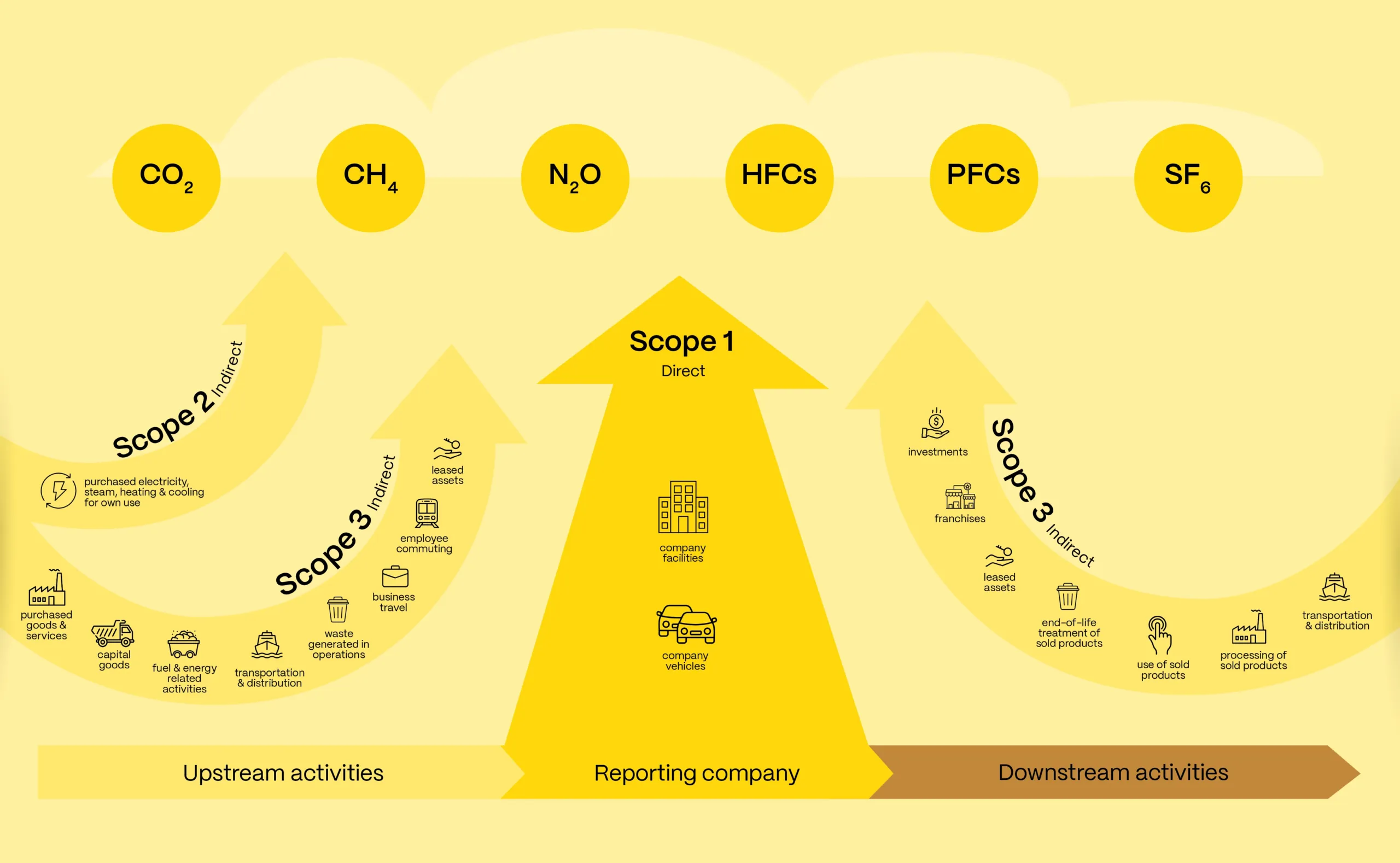
A carbon footprint is the total amount of greenhouse gas, expressed in carbon dioxide equivalents (CO2-eq), created by an organization or product. Greenhouse gases include carbon dioxide, methane, nitrous oxide, hydrofluorocarbons, perfluorocarbons, sulfur hexafluoride, and nitrogen trifluoride.
To determine a carbon footprint, an expert conducts an analysis using high-quality data. A carbon footprint analysis entails boundary setting, data collection, calculation of emissions, results analysis, and evaluation for risks and reduction opportunities.
Carbon footprinting is also defined by its scope; A company-wide assessment is titled a ‘corporate carbon footprint’, whereas a product-specific assessment is a ‘product carbon footprint’.
The framework used in the analysis depends on the assessment goal. For target-setting, the SBTi Corporate Net-Zero Standard is recommended. For reporting, various frameworks are available, including the GHG Protocol Corporate Standard, CDP, European Sustainability Reporting Standard (ESRS) E1 under CSRD, and IFRS S1.
For product carbon footprinting, relevant standards include the Greenhouse Gas Protocol Product Standard and ISO 14067:2018.