Henkel makes products that show up everywhere from high tech factories to kitchen cabinets. Its portfolio spans industrial adhesives, specialty chemicals, and everyday consumer goods, generating over €20 billion in annual revenue. Most of its carbon footprint lives not in its own operations but upstream, in the goods and services it purchases. That is where the real work of decarbonization has to happen.


For years, Henkel relied on expert-led, product-specific calculations, which was an approach designed for depth rather than enterprise-wide scale.


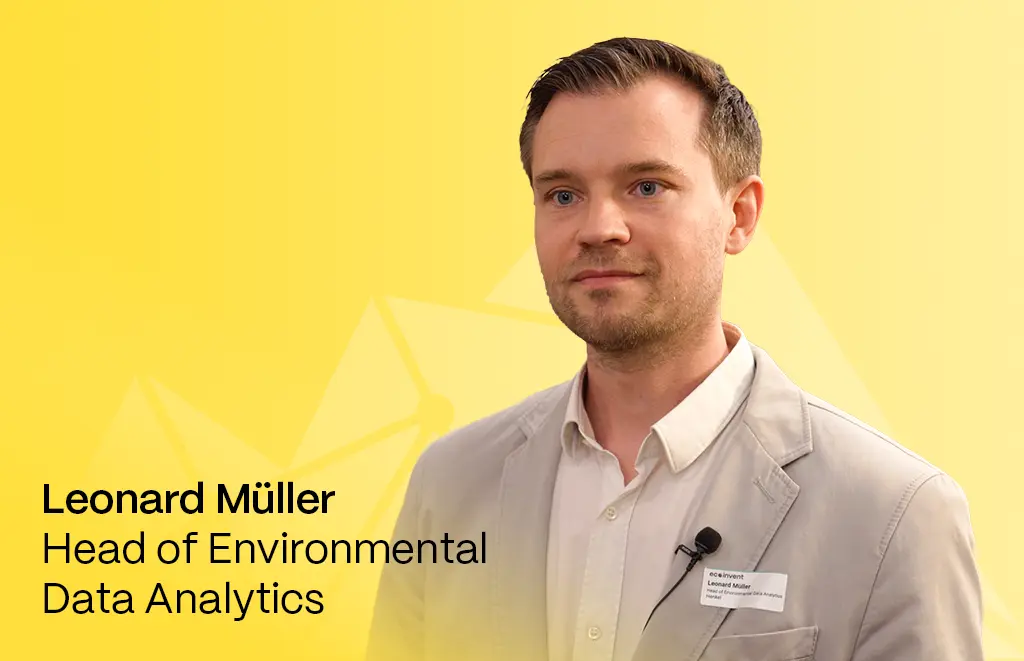
“In a company that has 50,000 products, that will not do the trick,” says Leonard Müller, Head of Environmental Data Analytics at Henkel. “It became clear that we needed to scale and integrate our data architecture. The commitment to net zero meant a commitment to setting up a new data architecture.”

Leonard Muller, Henkel image

Manual, project-by-project calculation could not keep pace with a portfolio of that size. Leonard describes what changed when more and more customer requests made that limitation impossible to work around. The answer was a different kind of infrastructure that required an enterprise-wide understanding of the supply chain.

The Challenge: Net Zero Required a New Data Architecture  

Scope 3 emissions from purchased goods and services account for roughly 75% of Henkel’s total footprint. That single figure defines the scale of the challenge. Any credible path to net zero runs through the supply chain, and understanding the supply chain means understanding what sits inside tens of thousands of products, sourced from thousands of suppliers, across multiple regions. 


Henkel sits between its suppliers and its customers. In the adhesives business particularly, it operates in a B2B context where customers increasingly require carbon footprint data for the materials they buy. That created a commercial imperative alongside the sustainability one: Henkel needed to know the footprint of its products for reporting, but also to have meaningful conversations with the companies it sells to. 


The data needed to build that picture already existed inside Henkel. The problem was that it lived in separate places. Supplier emissions data, purchasing data, master data, and bill-of-materials data sat in different systems, built for different purposes, with no shared view connecting them. Producing a carbon footprint for a single product meant manually pulling data from multiple sources and reconciling it by hand. That approach worked for a handful of high-priority products. It did not work for 50,000. 


The scale and complexity of the challenge ruled out tactical fixes.


“The next stage required moving from individual analyses toward integrated, enterprise-scale capabilities. This was not a challenge that could be solved with better spreadsheets or a larger LCA team. It required an enterprise data architecture that matched the scale of the business.”

Building the Platform: A Cross-Functional Transformation

Henkel’s response was to build a sustainability data platform that automates the path from raw supplier data to a usable product carbon footprint. This was not a project that the LCA department could execute alone. It required genuine cross-functional collaboration across sustainability, procurement, IT, analytics, and the business units.  The sustainability platform became shared enterprise infrastructure rather than another sustainability tool.


The architecture works in layers. Suppliers submit product carbon footprint (PCF) data aligned with the methodology developed by Together for Sustainability (TfS), a chemical industry initiative that Henkel helped found to standardize how suppliers report emissions data. That data is verified, then fed into a central data asset that connects with Henkel’s purchasing and master data, building up a library of carbon footprints for Henkel’s raw and packaging materials. Business units can then combine that library with their bill-of-materials data to calculate the carbon footprint of any finished product automatically.


Where a supplier cannot yet provide product-specific data, the raw material platform fills the gap with secondary data from ecoinvent. Waiting for every supplier to deliver verified primary data before building would have caused significant delays, and further delay sustainable action.


“My team verifies the data and integrates them in a system where all the data for raw materials are stored,” Leonard explains. “We use secondary data sources when we don’t have supplier data.”


This matters strategically. The platform does not require perfect supplier data to be useful. It is designed to operate today with the data available, while progressively replacing estimates with primary supplier data over time. Secondary data from ecoinvent provides the consistent, scientifically grounded foundation that makes the platform’s outputs comparable across a supply base of thousands of materials and suppliers.


The platform now serves two distinct audiences. Purchasing teams get dashboards showing emissions by supplier, by material, and by region, giving them a working view of where impact concentrates across the supply base. Customer-facing teams get automated product carbon footprint reports, complete with data quality metadata, so a sales conversation about a specific product’s footprint no longer requires a special request to LCA experts.

What the Platform Revealed: A New View of the Enterprise

Building the platform produced something no one had fully anticipated: a new cross-functional view of sustainability-relevant supply-chain data. The platform didn’t just reveal carbon emissions. It fundamentally changed how Henkel understood its own enterprise data.


Bringing data together across the enterprise opened up new ways to analyze products and supply chains and identify opportunities to reduce emissions. These new applications also revealed the need for higher data quality standards, as robust and reliable data became essential for informed decision-making and credible sustainability outcomes. As a result, Henkel’s sustainability platform is not only enabling deeper insights and emissions reduction initiatives, but also driving continuous improvements in data quality and governance. Both efforts reinforce each other, creating a virtuous cycle of better data, better decisions, and greater sustainability impact.


“Something that wasn’t possible before is to dive this deep into data,” says Leonard. Now, instead of spending time calculating the data, Henkel can focus its efforts on analyzing and understanding the data so that others can learn something from it. He adds, “that is a game changer if you think about steering towards our net zero goal.”


LCA experts, who had previously worked primarily in Excel calculating individual product footprints, found themselves managing and analyzing a large-scale data platform. Different functions began working together around shared data. The organization gained insights that had no direct connection to carbon accounting but proved valuable nonetheless.

The Outcome: Supplier Conversations Built Around Carbon, Not Just Price

With reliable, comparable footprint data, Henkel’s purchasing conversations with suppliers have changed. Discussions that previously centered on price and quality now also include targeted conversations about where and how to reduce carbon.


“With some suppliers, we went into very detailed conversations, and in the end we switched from one supplier to another, because we could reduce emissions,” Leonard says. “These conversations are really changing. Sustainability is becoming more part of the sales and purchasing conversations.”


That is the commercial consequence of having data that works. Not a sustainability report that sits on a shelf, but a number that changes a procurement decision.

Fill your data gaps with trusted, ecoinvent data.

Buy an ecoinvent license

The Next Step: Sustainability on Par with Financials

Henkel’s ambition is to integrate sustainability data fully into business decision-making, on equal footing with financial data.


“Going forward, I’m really excited to enhance our sustainability landscape to make it on par with financials in terms of steering the business,” says Leonard. “Businesses are very used to looking at financial numbers to identify cost reduction opportunities or high-cost drivers. We are now in a shape where we have sufficient data. We just need to connect the dots, and then we have an integrated business that sustainability is a vital part of.”


When sustainability and financial data sit side by side, past decisions become auditable, and future ones become better informed. The platform Henkel built is the foundation that makes that possible.

Where ecoinvent Data Fits

At the scale Henkel operates, verified supplier-specific PCF data is not yet consistently available across all materials and suppliers. Thousands of materials and suppliers will not have verified primary product carbon footprint data available. The question is not whether to use secondary data, but which secondary data to use.


ecoinvent’s secondary data provides the scientific foundation for making sustainability decisions at scale. It fills the gaps that primary supplier data cannot yet cover, in a way that is methodologically consistent across the entire supply base. Without that consistency, footprint comparisons across fifty thousand products would not hold up, and the sourcing decisions those comparisons enable would not be possible.


The strategic point is broader than gap-filling. Companies that wait for perfect supplier data before building a platform may never build one. Secondary data from ecoinvent is what allows Henkel to act now, improve over time, and make decisions today that would otherwise require years of supplier data collection. Instead of waiting for perfect supplier data, Henkel has built a system that continuously improves while already creating business value today.

See Leonard Müller and other sustainability leaders discuss their work in our Climate Week Zurich panel recording: “Environmental Intelligence in Practice: How Leading Companies Turn Data into Business Value.” 


To explore working with ecoinvent, contact our team.